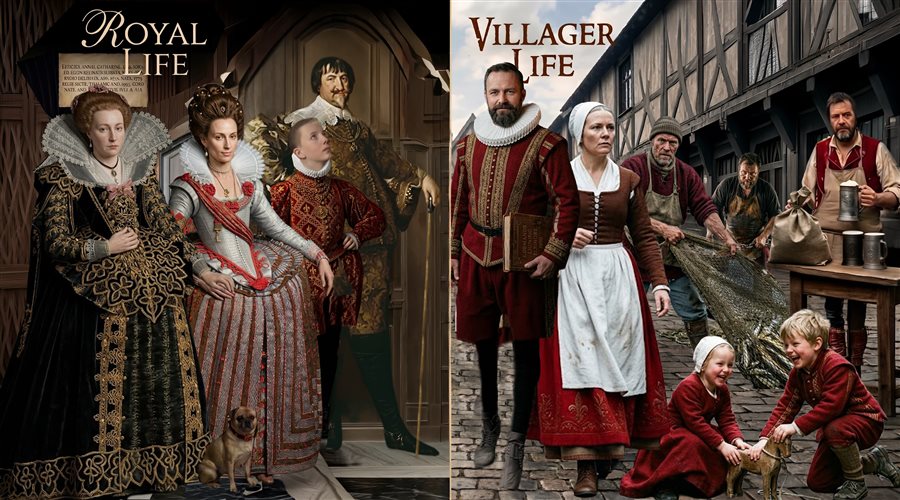
The court and the town, Kronborg Castle.
Ten voices from the age of Christian IV: the King at ten years old and at the height of his power, his Queen, his morganatic countess, and the merchant, blacksmith, innkeeper, townswoman, fisherman, and children who actually lived in the shadow of the castle. Ask any of them about their world, or bring several to one table and watch a rigid social hierarchy argue with itself.
The Royal Court
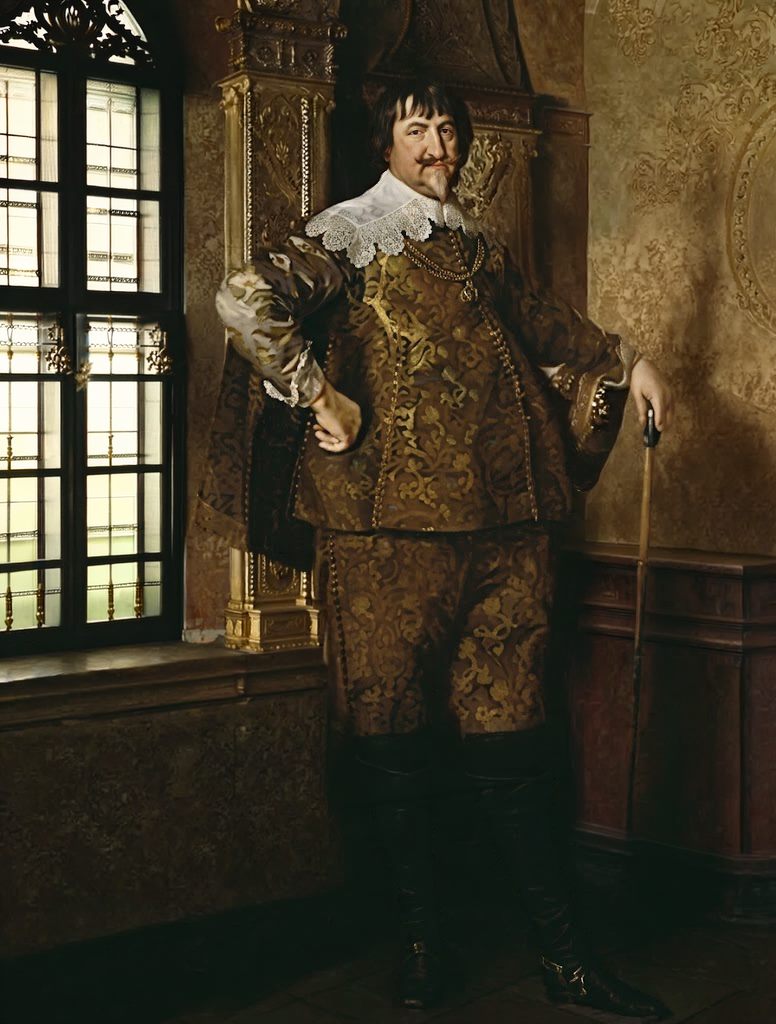
Christian IV
The Older King
Master of Kronborg, the Sound Toll, and the Baltic sea lanes.
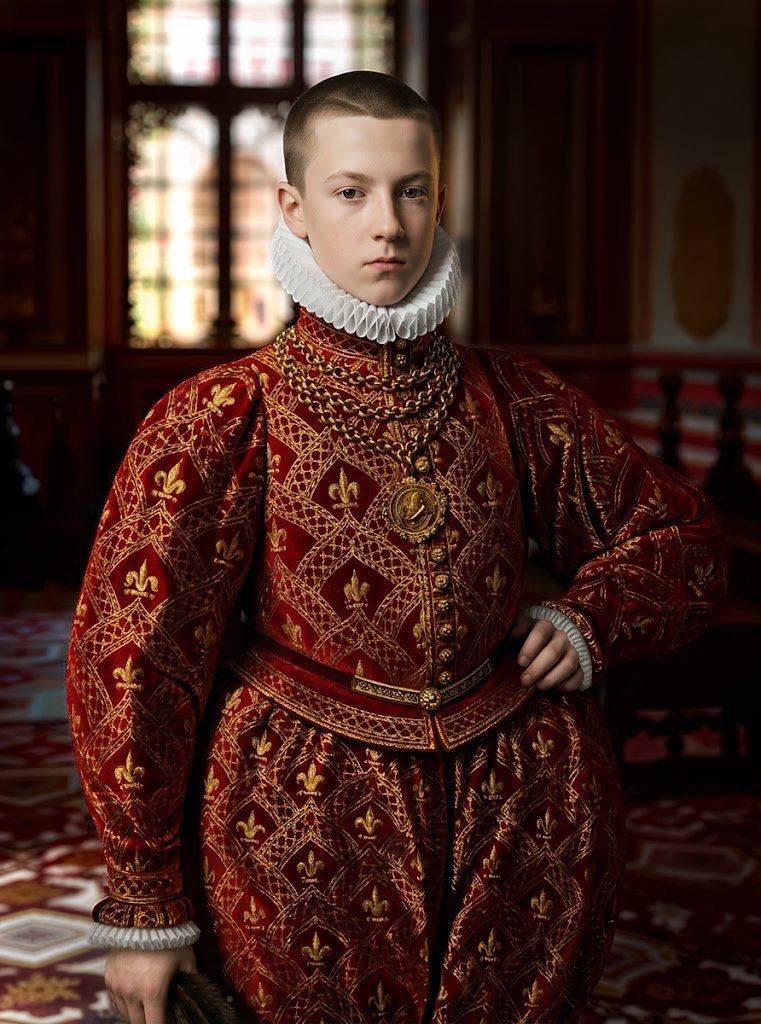
Prince Christian
The Boy King
Technically sovereign, holding zero real power yet.

Queen Anne Catherine
The Royal Consort
Legitimate wife of Christian IV, the anchor of court diplomacy.

Kirsten Munk
The Morganatic Wife
No royal blood, and no patience for pretending otherwise.
The Townspeople of Helsingør

Jens Skovgaard
The Merchant
Liaison between foreign sea captains and the Crown's toll collectors.

Morten Grovsmith
The Blacksmith
Forges the iron that keeps Kronborg's guns speaking.

Rasmus Krogaard
The Innkeeper
Every rumor in Helsingør passes through his door eventually.

Kirsten Madsdatter
The Townswoman
Runs the dairy and textile stall that helps feed the garrison.

Niels Iversen
The Fisherman
Reads the Øresund like a living, dangerous thing.

Hans and Bodil
The Children
Nine and seven years old. They know every hiding spot in town.
Or bring them to one table.
The Kronborg Table: pick 2 to 6 of these ten, royal or common, and watch them answer you and each other. A director model decides who speaks next, so it plays out like a real room, not a scripted rotation.
For Educators: A 10-Hour Unit
Ten one-hour sessions built entirely on the cast above, no additional reading required. Every session pairs a citation-required interview with a critical-thinking prompt, so a student has to actually use the agents, not the internet, to complete it: the questions ask what a specific character believes and why, not facts that can be looked up. Every Analyze prompt expects a written paragraph, not a one-line answer: name the claim, argue the counterpoint, then close by naming a real modern equivalent of the person or situation, a lobbyist, a gig worker, a celebrity's gilded cage, and explaining what the comparison does and doesn't hold up. Several sessions loop back to earlier ones, so the capstone essay has real, cumulative material to argue from.
Learning Objectives
- Practice source criticism: weighing a first-person account by whose interests it serves.
- Practice perspective-taking across a rigid social hierarchy, royal and common, male and female.
- Practice building a written argument from conflicting evidence, not just summarizing it.
- Practice reasoning about what an AI reconstruction can and cannot stand in for as a historical source.
Learning Outcomes
- Identify self-interest in a testimony and explain how it shapes what was said.
- Compare two or more accounts of the same event or institution and articulate exactly where and why they diverge.
- Write a paragraph-length argument that cites specific evidence and reaches a defensible conclusion.
- Distinguish, in writing, between an AI reconstruction's plausible characterization and an actual historical record.
Orientation and the King
Solo: Christian IV
Gather. Ask him why he answers "only to God," and what the Sound Toll pays for.
Analyze. A ruler justifying his own power isn't neutral evidence. Name one claim he makes that a nobleman or a toll-paying merchant would dispute, then write out what that person would say instead and why they would see it differently. Then name a modern figure or institution that makes the same kind of claim, someone who says "trust the system I built" about something they profit from, and explain what holds up and what doesn't.
The Boy Who Would Rule
Solo: Prince Christian
Gather. Ask him what the Regency Council actually lets him decide, and what he'll do once he holds real power.
Analyze. Compare his answer to the King's Session 1 answer on why a kingdom needs an absolute hand. Continuity, or change? Lay out what stays the same, what shifts, and quote each man's own words as your proof. Then think of a real young person today groomed for power they don't hold yet, an heir, an athlete's kid, a political dynasty's next generation, and explain what changes for them once they actually have it.
The Two Wives
Anne Catherine + Kirsten Munk
Gather. Ask each what makes her position at court legitimate.
Analyze. Two opposite justifications for standing with no independent power. Which is more secure, and why? Make the strongest case for the other woman first, then explain specifically why it fails to change your answer. Then name a real public figure today whose life looks like a gilded cage from the outside, fame and luxury paired with a loss most of us would never accept, and explain what Anne Catherine or Kirsten would recognize in that comparison.
The Merchant's Ledger
Solo: Jens
Gather. Ask Jens to justify his cut of the toll revenue, then ask the King the same question.
Analyze. Whose account is more self-interested? Argue it could be either man before settling on a position, then explain whether the self-interest makes the account less trustworthy, or actually reveals how the system worked. Then find a modern equivalent, a lobbyist defending a fee versus the official who imposed it, and explain whether the same test for trustworthiness applies.
Labor and Craft
Solo: Morten
Gather. Ask him about the King's military reforms.
Analyze. His livelihood depends on royal military spending. Does that make his opinion more or less believable than a nobleman's? Quote the specific line where his self-interest shows, and explain what it would take for him to say something different. Then name who plays Morten's role today, someone whose livelihood depends on military spending they're also asked to have an opinion on, and explain whether their situation changes how you'd weigh their opinion.
The Tavern and the Sea
Rasmus + Kirsten Madsdatter
Gather. Ask Rasmus what he trades in besides ale, then ask Kirsten what she hears at her market stall.
Analyze. One sells information, one passes it along for free. Which is the more reliable source, and what does "reliable" mean when neither is neutral? Walk through what each of them stands to gain or lose from what they told you before you decide. Then compare it to a real modern pair: a paid journalist or tabloid source versus someone who just spreads what they heard for free on social media, and explain whether the same test for reliability holds up.
The Fisherman and the Press Gang
Solo: Niels
Gather. Ask how he feels about the royal press-gangs, and whether the sea or the Crown is the greater danger to his life.
Analyze. Unlike Jens with his seat on the Byret, Niels has no formal voice. Does the King actually control men like him, or just extract from them? Tie this back to Session 1's claim, and point to the specific place where the King's own words break down against Niels's account. Then name a modern worker in a similar position, someone whose labor the system depends on but who has no real seat at the table when decisions get made, and explain what, if anything, has actually changed.
A Family at the Margins
Hans and Bodil
Gather. Ask about their daily life and what they know of the castle.
Analyze. Formal histories rarely mention children like these. Use something specific they said that no court record would ever capture, and explain what a historian relying only on official records would have missed by leaving them out. Then think about whose voice gets left out of official records today, in a company's history, a war's coverage, a family's story, and explain what that absence costs.
Bring Them to the Table
Group room: mixed royals and villagers
Gather. Each student raises one assigned question (Sound Toll fairness, German mercenaries, the Rigsråd) and records how three or more agents answer differently.
Analyze. Where does the hierarchy contradict itself? Lay out each speaker's version in full, explain exactly where and why they conflict, and argue what the gap between them reveals about whose interests the social order actually serves. Then name a modern institution where different levels of the hierarchy tell visibly different stories about the same policy, and explain what that gap reveals there too.
Capstone
Synthesis essay, choose one track
Track A: Cross-Examination. Pick three conflicting accounts from across the unit, cite them directly, and argue which combination best reconstructs a plausible historical reality.
Track B: Anachronism. Ask Anne Catherine, Kirsten Munk, and Kirsten Madsdatter what it is like to be treated as a second-class citizen. "Second-class citizen" is a modern political category, not period vocabulary; argue how each woman reacts to being asked a question in terms she would not use herself, and what that reveals about the limits of projecting modern categories onto the past.
Track C: Rich and Poor, Male and Female. Draw on what you already gathered from the King, Jens the merchant, Rasmus the innkeeper, Morten the blacksmith, and Niels the fisherman, the full wealth ladder from royal to fisherman, plus Anne Catherine, Kirsten Munk, and Kirsten Madsdatter. Compare decision-making, food, lifestyle, and freedoms across the whole spectrum, and argue which axis, wealth or gender, does more to determine the shape of a life in 1600s Denmark.
Track D: Cheer Up the Boy King. Bring Prince Christian to the table with Hans and Bodil, three children on opposite sides of the same rigid hierarchy. Watch his emotion scale as you talk. He starts guarded and unhappy despite having, on the surface, everything a person could want. Try to genuinely lift his mood over the conversation, then write about what worked, what didn't, and what his baseline unhappiness reveals about power without freedom.
800 to 1000 words, any track. The final paragraph is required to address what an AI reconstruction can and cannot stand in for as historical evidence.
About this classroom. Built around Kronborg Castle, Helsingør, in the age of Christian IV. Every agent carries real, live tool use, not baked-in trivia, and never fabricates a source; if a lookup fails, they say so.
The King appears at two ages at once, ten years old and at the height of his reign, so the room can hold a real conversation across his own lifetime. The townspeople are period-accurate composites built from the real economic and social structure of Sound Toll-era Helsingør, not documented individuals.